
Builder Straight Talk presents an insightful conversation with Sergio Barajas, the driving force behind the National Hispanic Construction Alliance (NHCA). Sergio shares his journey into the construction industry, the urgent labor challenges facing the sector, and how the NHCA is shaping opportunities for Hispanic workers and contractors nationwide.
From changing the narrative around blue-collar trades to fostering leadership and business growth, this episode explores the alliance’s mission, strategic pillars, and upcoming initiatives designed to empower the Hispanic construction community and the industry at large.
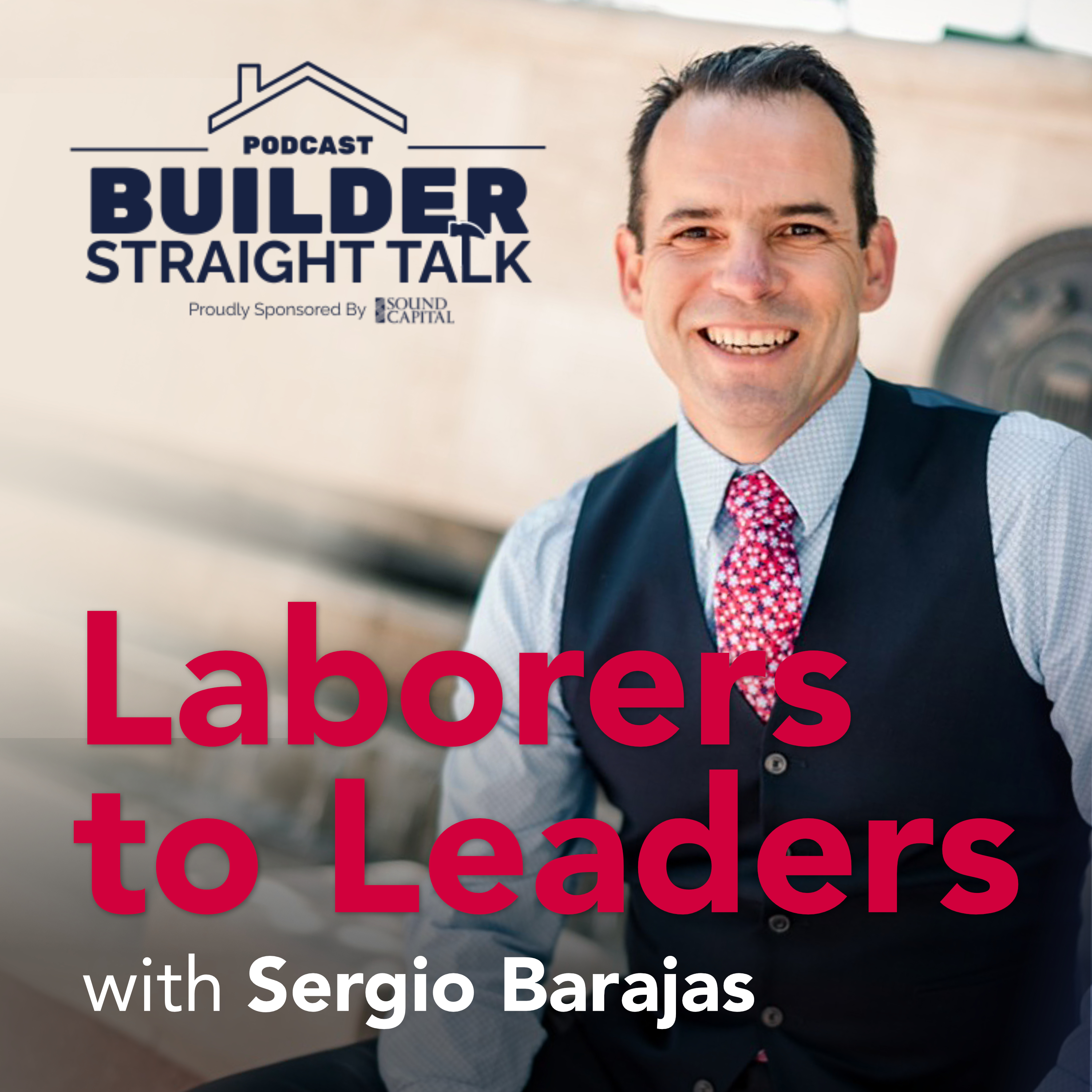
Michael Krisa: Sergio, I know the National Hispanic Construction Alliance is your passion project, but before we dive into that, tell me – how did you get into construction? Were you on the tools once upon a time, or did you come in another way?
Sergio Barajas: Actually, I never swung a hammer professionally. My experience has been around construction for a long time, starting in my mid-twenties working for the housing department of Los Angeles. Whether it was single-family rehab or multifamily affordable housing, I was involved in financing and project management more than hands-on trades. I did some work at home and for family and friends, but professionally, I was always on the management side.
What really got me engaged recently was the recognition of a severe labor shortage in the construction industry.
Right now, for every five people retiring, only about 1.3 to 1.4 people are entering the trades. That gap is unsustainable.
Michael Krisa: So, is part of your focus about educating people on the viability and profitability of the trades compared to pursuing a degree that might not lead anywhere?
Sergio Barajas: Absolutely. Twenty years ago, blue-collar work became almost a four-letter word. Folks were persuaded to go to college because the trades were seen as dead-end with no real opportunity to prosper. That mindset had good intentions but missed the reality that construction trades offer a solid path to financial stability and wealth-building. The work allows people to grow their families and their businesses.
Our focus is changing that narrative – showing that blue-collar work is not just honorable but also profitable and sustainable. Many high school graduates don’t see a pathway forward, so we want to expose them to what’s possible.
Michael Krisa: I think a big part of the problem was removing shop class and home economics from the curriculum. Kids lose that tactile experience of building something, and so they don’t even dream about a career in construction.
Sergio Barajas: Exactly. When kids don’t get that hands-on exposure, it makes the trades seem inaccessible. We’re happy to see programs like the Home Builders Institute, which runs campuses across the country and serves military veterans and even people coming out of incarceration. These programs help fill the gap by giving people a chance to build skills quickly and productively.
Compared to waiting four or six years for a college degree, tradespeople can start earning and building a career much faster. Within two years of apprenticeship, someone could start their own company. That’s a powerful opportunity.
Michael Krisa: That’s a great point. Meanwhile, many college grads end up unemployed or underemployed, while tradespeople are repairing parks and infrastructure that keep communities running. It’s a fascinating contrast.
Sergio Barajas: It really is. We try to show people that five years in the trades versus five years in service industry work can make a huge difference in earnings and career growth. We want to help not only young people but also those transitioning from other industries to understand their options and the paths forward.
Michael Krisa: Let’s turn to the National Hispanic Construction Alliance itself. What was the spark that made you decide to create this organization, and how has it evolved?
Sergio Barajas: The spark was about four years ago at the National Association of Hispanic Real Estate Professionals (NAHREP) annual conference in San Diego. Home Depot, a national sponsor, asked NAHREP to convene a roundtable with Hispanic contractors to understand how they could better serve this community. I was asked to organize that group.
We expected maybe 10-15 people but ended up with 30-40 contractors showing up. That showed there was a real unmet need and a voice that wasn’t being heard. NAHREP’s mission focuses on sustainable Hispanic homeownership, and one of their biggest challenges is inventory shortage – not financing. So we realized we could help solve two problems: increase housing inventory by growing the construction workforce and strengthen Hispanic construction businesses.
Since then, the NHCA has grown quickly. We’re about 14-15 months into executing our business plan, with approximately 2,500 members across eight markets nationwide. Our goal is to double that membership to over 5,000 and expand to 15 markets by the end of this year.
Michael Krisa: That’s impressive growth. And I understand you intentionally call yourselves the National Hispanic Construction Alliance, not just a contractors’ alliance. Why is that?
Sergio Barajas: We want everyone in the construction ecosystem – architects, engineers, contractors, insurance providers – to be in the same room. That way, members don’t have to leave the alliance to do business. We create a space where all the key players can connect and collaborate on projects, making business smoother and more efficient.
Michael Krisa: Is there a structured path within the alliance for members who want to grow from a contractor to a builder or developer? Do you have masterminds or educational programs?
Sergio Barajas: We do have a plan, but it’s not fully formalized yet. When contractors come to us, we triage their needs because everyone is at a different place in their business journey. Some aren’t even licensed yet, so we help them navigate that process. Others have licenses but lack basic business practices like banking, insurance, bonding, or tax filings.
For example, we’re working with Elements Hospitality, a major hotel remodeler, to source subcontractors who meet these criteria. We identify opportunities and help members prepare to meet them. So yes, as we grow, we’re becoming an opportunity center offering multiple pathways depending on where members are and where they want to go.
Michael Krisa: So the alliance is more than just networking; it’s about creating tangible business opportunities and helping members build toward those.
Sergio Barajas: Exactly. The real value often happens at the local chapter level, where people can connect face-to-face and learn about specific opportunities in their markets. For instance, the Los Angeles chapter recently held an event focused on fire recovery projects, helping smaller contractors understand how to build networks and bid on those jobs.
Similarly, in Nashville, we’re working with local builders on downtown projects, showing members how to engage with larger general contractors. Each market has unique opportunities, but the need for skilled tradespeople is universal.
Michael Krisa: That’s a powerful dynamic. The alliance acts as a catalyst, making it easier for members to connect and collaborate, which otherwise might take months of knocking on doors.
Sergio Barajas: Yes, the path is already forged.
When members meet, they can immediately start talking about jobs and bids. It’s not a “let’s get back to this later” conversation – it’s happening in real time, which benefits everyone involved: owners, GCs, subcontractors, and suppliers.
Michael Krisa: I heard you’re running a “Build the Builder” series at the upcoming conference. Tell me more about that.
Sergio Barajas: We’re hosting a series of six classes over two days during the AVANCE Global conference in San Diego this September. The goal is to help construction workers and contractors transition into the development side of the business. Topics include site selection, bidding, project management, blueprint reading, and how to work with larger GCs.
This is about giving people the tools and knowledge to think beyond just swinging a hammer or running a small contracting business – to empower them to become developers and bigger players in the industry.
Michael Krisa: That peer-to-peer learning must be powerful – seeing someone like Sergio doing it makes it feel achievable.
Sergio Barajas: Exactly. Mindset is critical.
We foster a culture of giving within the alliance. Members lead with the giving hand – asking “What can I contribute?” rather than “What can I get?” That attitude creates a virtuous cycle where everyone benefits.
Michael Krisa: I appreciate that philosophy – “doing well by doing good.” It’s a great way to build a community.
Sergio Barajas: It’s our unofficial motto. If we focus on helping everyone succeed, we’ll all do well in the long run.
Michael Krisa: Some might wonder if having a Hispanic construction alliance splinters the industry into factions. What’s your take on that?
Sergio Barajas: It could, but it depends on the messaging and intent. There are minority contractors associations, Black contractors associations, and others. Each addresses specific needs within their communities, but the goal is inclusion and growth for the industry as a whole.
Hispanics represent over 30% of the construction workforce, but less than half that in management and leadership. Helping this segment grow benefits everyone. Our network is open to all, regardless of background. We focus on building bridges, not walls.
Michael Krisa: That’s a helpful analogy – the Mustang club example. You don’t have to own a Mustang to appreciate the club; it’s about shared passion and mutual growth.
Sergio Barajas: Exactly. Our boards have men and women, Hispanic and non-Hispanic members. The focus is on providing resources and business acumen so our members can thrive.
Michael Krisa: You mentioned a recent report on the state of Hispanics in construction. What are some key takeaways?
Sergio Barajas: The report highlights a labor shortage of over 400,000 unfilled trades jobs nationally.
Hispanics make up over 30% of trades workers but only about 14-15% of leadership roles. There’s an education gap that limits advancement opportunities.
Addressing these gaps is critical to closing the leadership deficit and ensuring the workforce can meet growing demand. We have to take responsibility and focus on capacity building, education, and skill development.
Michael Krisa: Why do you think leadership representation is low? Is it systemic, or are there other factors?
Sergio Barajas: It’s a mix. Some is our own fault – lack of education or awareness of what’s needed to advance. Sometimes there’s a perception that Hispanic workers are better suited to manual labor, so they get pigeonholed and aren’t encouraged to move up.
Also, many workers are comfortable where they are and don’t seek leadership roles. Language barriers can also discourage people from stepping up. We want to encourage members to raise their hands and give contractors the tools to recognize and develop talent.
Michael Krisa: You also mentioned translating training materials into Spanish. That’s a great example of removing barriers.
Sergio Barajas: Yes, we partnered with VDCI to translate bidding, estimating, and blueprint reading courses into Spanish. That’s a concrete way to help members gain skills and move forward.
Michael Krisa: How do you help members understand the bigger picture – working with big GCs, government contracts, or development projects?
Sergio Barajas: At our upcoming conference, we have panels with major GCs explaining what it takes to become a subcontractor for large projects. We also have sessions on government contracting and business foundations. Many contractors don’t know how to pursue these opportunities, so education is key.
Michael Krisa: The “rabbit hole” of not knowing what you don’t know is definitely a trap.
Sergio Barajas: Exactly. Exposure is everything.
Michael Krisa: Let’s talk about the upcoming conference in San Diego. What can attendees expect?
Sergio Barajas: NHCA is hosting a “Build the Builder” series at AVANCE Global, the nation’s leading convention focused on advancing Latino professional and economic mobility in San Diego, September 18-21, 2024.
The six classes, and other sessions offered over two days will cover topics such as site selection, bidding, project management, blueprint reading, and how to engage with national general contractors.
The goal is helping contractors transition into development and become bigger industry players. The conference expects 5,000-7,000 participants and we are offering a special $99 registration for students and new apprentices.
Michael Krisa: Is there a special podcast listener rate?
Sergio Barajas: We can definitely work something out. I think it’s important for industry professionals to be there to see the diversity and energy firsthand.
Michael Krisa: How do sponsors get involved, and what kind of sponsors are you looking for?
Sergio Barajas: Sponsors can reach out through our website, nhca.pro. We’re looking for diverse sponsors across the construction industry – manufacturers of safety equipment, home builders, developers, construction supplies, insurance companies – you name it.
For example, we have sponsors providing boots and safety gear, which are essential. We’ve also been trying to engage car companies to support truck sales, which are critical for contractors.
Michael Krisa: It sounds like an ecosystem approach, connecting suppliers, contractors, and developers.
Sergio Barajas: Exactly. It’s about synergy and creating win-win opportunities. The slogan again is “doing well by doing good.”
Michael Krisa: Will there be a trade show component at the conference?
Sergio Barajas: Yes, there will be an expo, though it’s currently more real estate-focused. We hope to expand the construction expo side in the future as the discussion grows.
Michael Krisa: You mentioned that in January 2024, the alliance had zero chapters and members, and now you’re at 2,500 members and eight chapters. That’s rapid growth. How did you achieve that?
Sergio Barajas: We leveraged NAHREP’s 25 years of infrastructure and experience. We’re not building a platform from scratch; we’re building on a strong foundation. That helped us grow quickly and strategically.
It’s also about persistence. Early conversations with sponsors were tough, but as we grew membership and chapters, doors started opening. Once people see the traction, they want to get involved.
Michael Krisa: You talked about diversity, equity, and inclusion (DEI). How do you approach that within NHCA?
Sergio Barajas: We focus on business development. It’s not about labels but about increasing customers, sales, and execution. DEI conversations often get divisive, but if we focus on meritocracy – “Can you do the job well?” – that’s what matters.
We want to bring people together to build the country, not divide it. Hispanic workers have contributed enormously to America’s construction history, just like other immigrant groups. We want to build on that legacy.
Michael Krisa: I appreciate your straightforward take on that. One last question about sponsors – why should companies get involved now?
Sergio Barajas: Because this is ground-floor opportunity. Like early real estate investors who struggled to get loans initially, sponsors who come in early build trust and become part of the DNA of the alliance. That pays dividends as we grow.
We’re building a national board, a corporate board of governors for sponsors, and fostering cross-pollination among members and sponsors. It’s a smart investment for anyone who wants to grow with the industry.
Michael Krisa: You mentioned “academies” within NHCA. What are those?
Sergio Barajas: We have three main academies: the Trade Workers Academy, Construction Management Academy, and Community Development Academy. These aren’t physical schools but collections of contacts, curriculum, and content tailored to each group.
They help members identify where they are, what resources they need, and how to grow from one stage to another. It’s a structured but flexible approach to capacity building.
Michael Krisa: As we near the end, if you had the floor in front of all builders and contractors, what’s your key message about the future of construction?
Sergio Barajas: We want to be part of the business of construction, not just labor. Hispanic workers represent a significant and growing portion of the workforce. We’re ready and eager to take on greater roles in leadership and business ownership. Help us prepare and position ourselves for those opportunities.
Because if we don’t have diverse leadership, the industry will face a gap in the future. We want to grow strong, profitable businesses and contribute fully to the industry’s success.
Michael Krisa: Sergio, is there anything else you want to share that we haven’t covered?
Sergio Barajas: I think we covered the big points. This is grassroots work, but it’s important for the industry and communities. We want to work cohesively, identify opportunities, and build a thriving ecosystem. Doing well by doing good – that’s the heart of what we’re building.
Michael Krisa: Where can our readers learn more or get in touch with you?
Sergio Barajas: The best place is our website, nhca.pro. There’s a contact form that goes directly to me. You can also email me at vision@nhca.pro or sbarajas@nhca.pro. If you need to reach me quickly, my number is 714-883-2855. I pick up the phone because that’s how a construction business should operate – respond promptly to opportunities.
Michael Krisa: Sergio, thanks so much for your time and for sharing your vision. I’m looking forward to seeing where this goes and to the conference in San Diego.
Sergio Barajas: Thanks, Michael. I appreciate the opportunity and look forward to connecting with you and the community in San Diego.

0 Comments