
Accessory dwelling units (ADUs) are changing the way builders, homeowners, and developers think about growth—and Whitney Hill is right at the front of that movement.
Whitney Hill is the co-founder of SnapADU, a California-based construction and development firm specializing in accessory dwelling units (ADUs). What started as a niche offering has grown into a full-scale operation designed to meet the rising demand for smarter, more flexible housing solutions.
In this episode of Builder Straight Talk, Whitney lays out how accessory dwelling units have exploded in popularity, especially in tight urban markets where space is limited and home values are rising fast. She shares how focusing on ADUs opened new revenue streams and created opportunities for homeowners to unlock wealth right in their backyards.
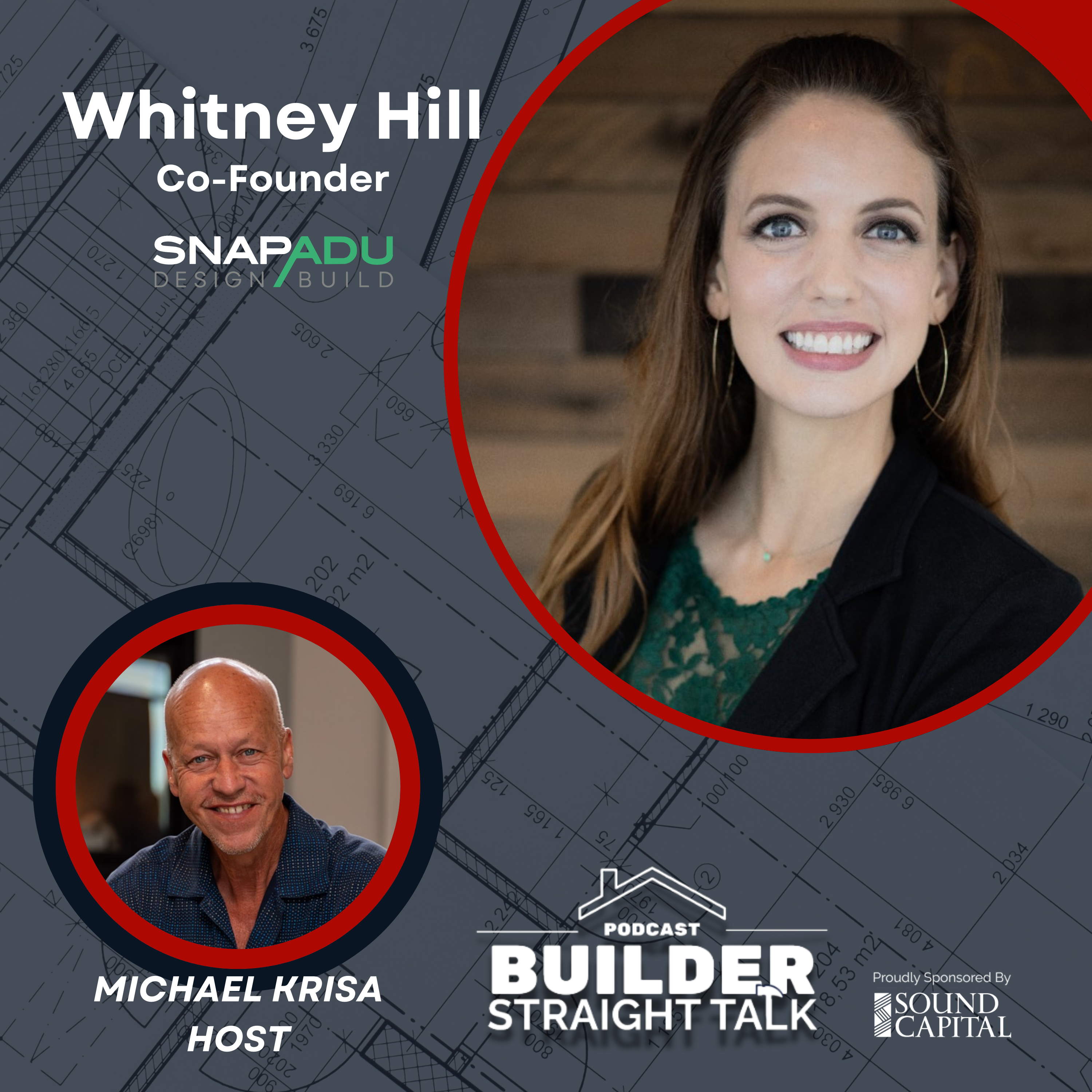
Whitney talks about the importance of specialization. Rather than chasing every project, SnapADU dialed in on building systems and processes specifically for ADUs—standardizing plans, permitting, project management, and construction delivery. That tight focus helped the company grow in both volume and efficiency, while still offering clients a semi-custom experience.
“ADUs aren’t just about adding space. They’re about adding options—options for families, for rental income, for multi-generational living.”
Whitney also shares the hard lessons learned early on: dealing with city permitting chaos, managing client expectations, and building a brand that clients trust without overpromising. She emphasizes that real estate development—even on a small lot—requires vision, patience, and clear communication.
One of the big takeaways? Builders who want to scale with ADUs need to think differently. It’s not custom homebuilding. It’s a hybrid between spec efficiency and client-driven customization. Success depends on having a streamlined product offering that can flex without breaking project timelines or budgets.
She also touches on the broader market dynamics. In cities like San Diego, LA, and San Francisco, accessory dwelling units are part of how local governments are trying to solve housing shortages without massive new development. That trend is likely to continue, offering builders a long-term opportunity if they can figure out how to deliver ADUs profitably.
“The opportunity is huge. But the builders who win will be the ones who systematize early, not the ones treating every project like a one-off.”
Whitney’s insights aren’t just for California builders either. As zoning laws evolve across the U.S., smart operators are already eyeing accessory dwelling units as a critical part of future real estate strategies—from boosting single-family property value to creating cash-flowing rental portfolios.
If you’re thinking about scaling your business, adapting to market shifts, or offering new products that match where the demand is headed, this conversation with Whitney Hill will give you a clear blueprint on how to do it right.
Watch the full episode on YouTube or listen here or on your favorite podcast platform
About Whitney Hill
Whitney Hill is the co-founder and Head of Business Development and Innovation at SnapADU, a California-based general contracting firm specializing in accessory dwelling units (ADUs). With a background in management consulting and a passion for streamlining systems, Whitney helped turn SnapADU into a leading builder in the Southern California ADU market. She is dedicated to making ADUs more accessible through education, transparency, and operational excellence.
To learn more about Whitney and SnapADU, visit snapadu.com.

0 Comments