
You know how some people plan their entire career path from day one? This isn’t that story.
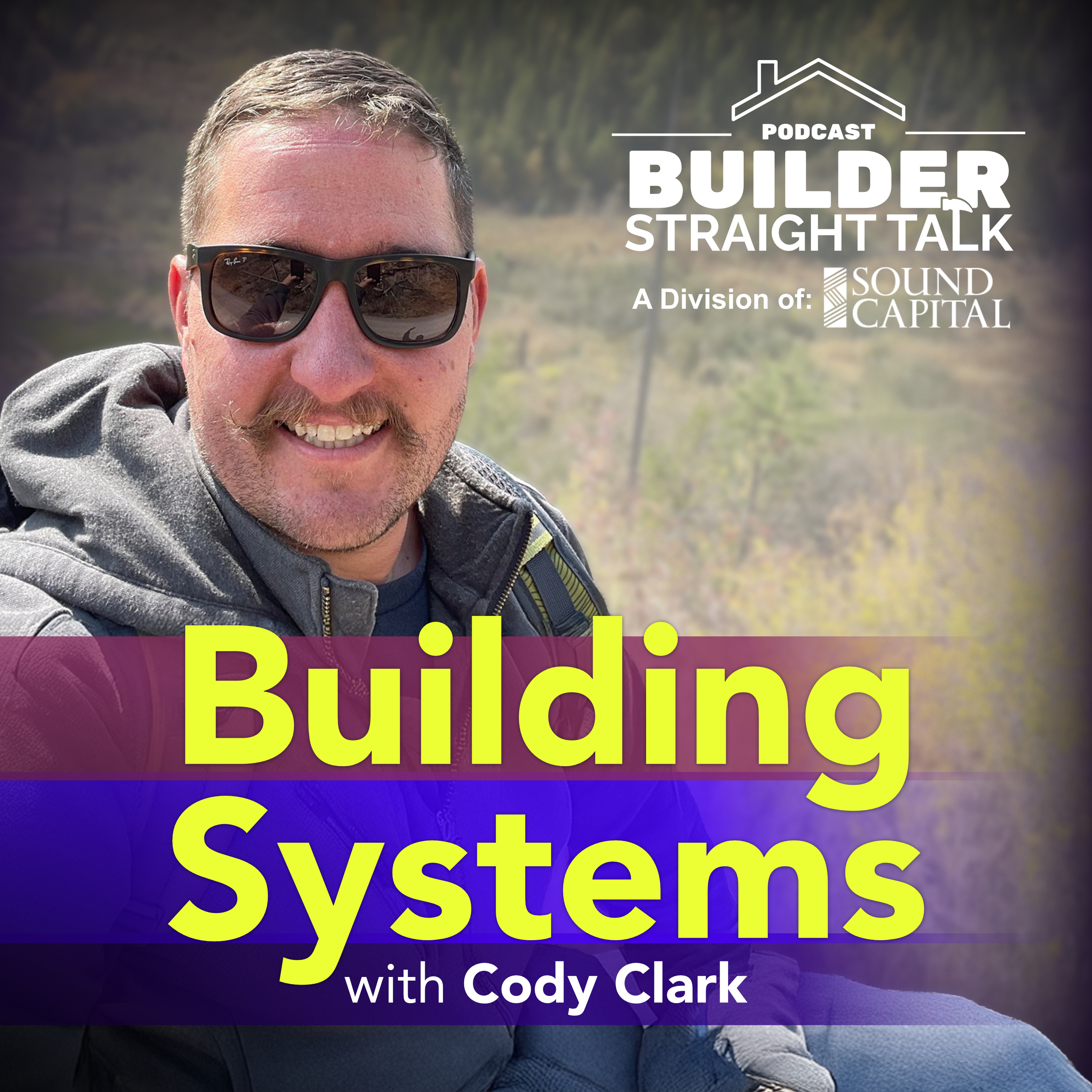
Cody Clark was pulling people out of burning buildings and working ambulance calls when he decided to build his own house. Not because he wanted to become a builder, but because the one good builder he found was too expensive.
So he did what any reasonable person would do: took that builder’s bid sheet, figured he could do it cheaper, and convinced a buddy to sign off on the paperwork (because Texas won’t let you build your own house without a licensed builder’s signature).
That first build went fine. Then a friend offered him $40,000 to build another house. “Holy smokes. I said, 40,000. Oh, I’ll do anything for 40,000 bucks,” Cody remembers.
When you’re making $60,000 a year as a paramedic, that’s hard to turn down. The house itself turned out great, but Cody learned the hard way that building for someone else is completely different than building for yourself. Turns out, clients have expectations about things like selection processes and communication.
For about five years, Cody juggled both jobs. He’d work his shifts at the fire department, then build houses on the side. His CPA finally told him to start an LLC before the IRS murdered him on taxes. He posted a few pictures on Facebook, thinking he’d do maybe two houses a year and retire from the fire department after 30 years. That didn’t happen.
What started as a side hustle grew into Clark Custom Homes.
But leaving that fire department job? That wasn’t easy. “I was like, are you sure? Are you sure you’re sure? Because I’m not sure,” Cody says about his prayers over the decision. “I sat for that position. There was 2,000 people there and they were hiring six or maybe ten. You have a better chance of getting struck by lightning than you do getting hired.”
Walking away from that to build houses full-time felt insane.
Cody talks about the parallels between running a fire department and running a business. The fire chief isn’t the one pulling hoses or climbing ladders. He’s organizing chaos, delegating positions, making sure everyone knows their role. That realization changed everything. But getting there? That almost broke him.
There’s a moment in the conversation where Cody admits he told his wife he’d never wanted to quit something so badly in his life.
“I told my wife, I said, I’m not a very good God. What I mean by that is I was all things to all people, but I was nothing to anyone. I was trying to be everything to everyone and I was not doing a very good job of it, and I was failing in all aspects.”
The turning point came through prayer, sure, but also through getting smart about who he listened to. He brought in EOS (Entrepreneurial Operating System) through a general manager who’d used it before. He started reading books like crazy. He hired a business coach who’d already paid for all the “ignorance capital” so Cody didn’t have to.
“I really suck. I’m really not that good at all,” Cody says with surprising honesty. “I’m just really smart enough to listen when somebody says, ‘Hey man, you look like you’re drowning over there. You want a life raft?'”
The banking stuff is wild. In Texas, there’s no licensing requirement for builders, which means literally anyone can hang a shingle. So banks create their own rules.
Early on, Cody couldn’t get financing because he hadn’t done enough builds, but he couldn’t do more builds without financing. Classic catch-22. Now banks send him steaks at Christmas and beg to take him to lunch.
He’s also seen the dark side: clients who run out of money mid-build and blame him, and worse, a client who fronted $175,000 to another builder who just spent it and went out of business.
When they asked Cody to take over and absorb the loss, his answer was clear:
“As we used to say in the fire department, your emergency does not constitute an emergency on my part. We have to look at it very logical and not emotional.”
Lessons learned the hard way.
The marketing conversation is probably the most practical part. Cody hired professional videographers who made everything look polished and perfect, but it felt fake. Then he started just sitting on his porch with his phone, shooting raw, unedited videos.
“I was drawn to the authenticity,” he explains about what inspired the approach. Wind blowing, dogs barking, whatever. People actually watch those. A realtor he’d never met told his sales team she watches his videos all the time.
But here’s why Cody thinks authentic beats polished:
“Everybody’s work looks like… you wouldn’t be in business if you didn’t have decent looking work. That’s a given. Everybody has eye candy.”
The differentiation isn’t in the finished product photos anymore. It’s in letting people actually know you.
I pushed Cody to think bigger: don’t just sit on the porch, bring clients onto the porch. Film on job sites. Answer the ten questions people ask, then answer the ten questions they should ask but don’t know to ask.
Right now, Clark Custom Homes is doing exclusively custom homes, running about a million-dollar potential annually, but Cody’s watching land prices drop and thinking about specs in 2026.
“When interest rates are really high, the rich are getting even richer. If you have 2 million, you don’t care if it’s a 20 percent interest rate. You’re excited because your money’s making interest.”
So if he builds specs, he’s thinking $2 million range, not middle America.
Towards the end of the conversation, we circle back to this idea that all the information is out there. The secrets aren’t really secrets. One of Cody’s wealthy clients who sold his business for generational money told him something that stuck:
“Those secrets are safe. Everybody’s too lazy to execute on them.”
And that’s the real difference. Not talent, not connections, not even money. Just the willingness to actually do the work everyone else talks about doing.
Cody’s still figuring it out. He’s bought back some of his time. He’s got a team he trusts completely. He’s learned to say “we” instead of “I” because he knows he didn’t get here alone.
Cody Clark is the CEO of Clark Custom Homes, a company built on craftsmanship, transparency, and integrity. His path into homebuilding started almost by accident. Growing up, he learned construction working alongside his dad, who learned from his grandfather, a homebuilder. They bought and rebuilt rough homes in the neighborhood, giving Cody hands-on experience with every trade.
Years later, while serving as a firefighter paramedic, Cody and his wife decided to build their own home. Unable to find a builder who fit their needs and budget, he took on the project himself. What began as a one-time build evolved into something bigger. A friend asked him to build their house, then another, and after sharing photos online, word spread quickly. Over the past seven years, Clark Custom Homes has grown into a trusted brand known for quality and communication.
Cody’s leadership style is mentorship-driven and systems-focused. He believes in teaching by example and fostering an environment where craftsmanship and accountability come first. He’s passionate about helping his team grow both personally and professionally.
Outside of work, Cody finds balance outdoors. He loves mountain biking, hunting, and exploring national forests and parks. Whether building fence, welding, cutting grass, or working cattle, time spent working with his hands helps him stay centered and brings focused energy back to his leadership at Clark Custom Homes.
Connect with Cody:
- Facebook: facebook.com/Clarkcustomhomesllc
- Instagram: instagram.com/clarkcustomhomes.llc
- YouTube: youtube.com/channel/UCFa3KMKztlnAtAepSuK9WUg
- Google: g.co/kgs/p2Z4PL4

0 Comments