
So here’s a story you probably haven’t heard before. A builder in Australia goes from nearly losing everything to dominating an entire market segment. Then he discovers that America, the land of innovation and doing everything bigger, has somehow completely missed the boat on what he’s been doing for 20 years.
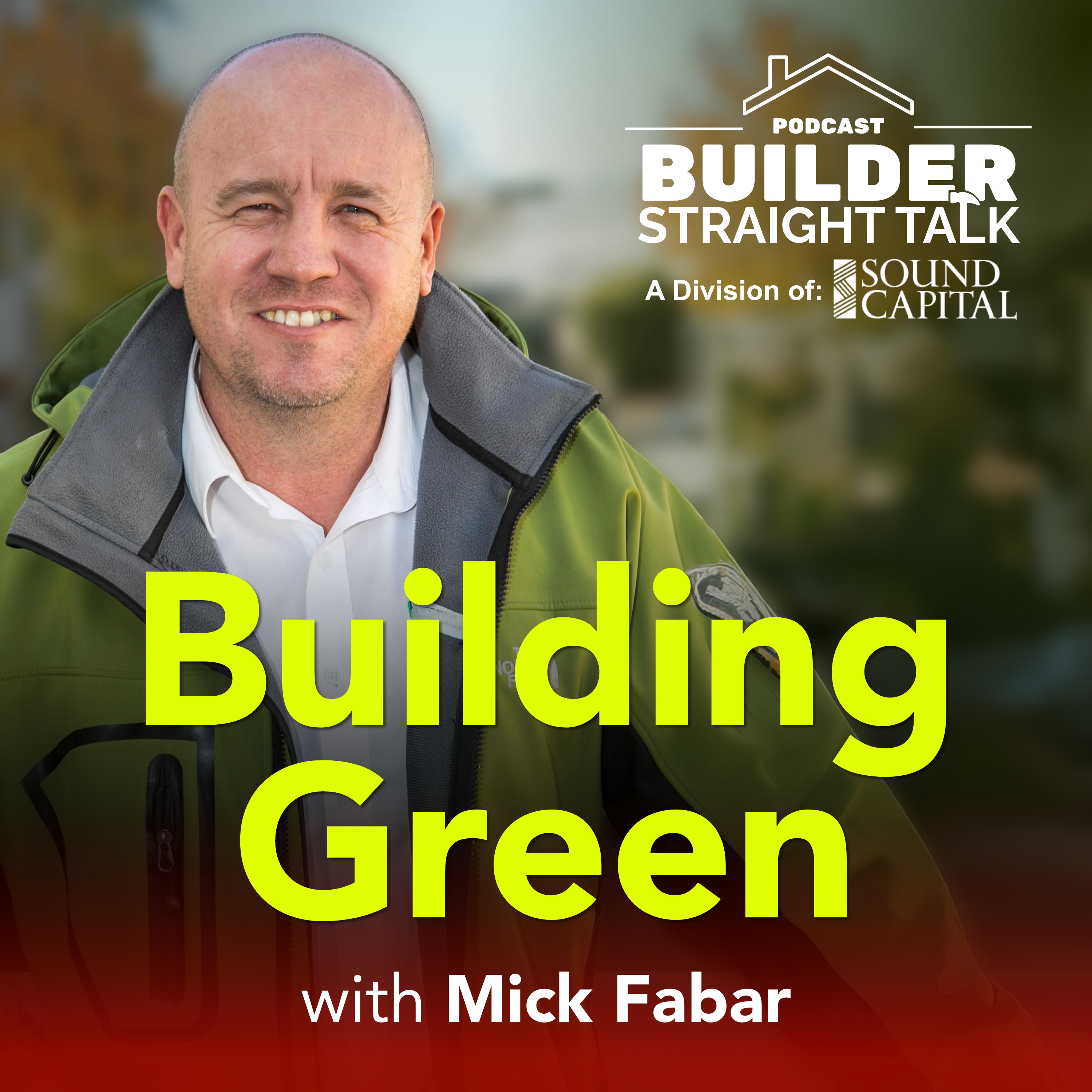
Mick Fabar started out the traditional way. Left school at 15, became a qualified builder by 21, had his own company at 22, and built his first house at 23. By the early 2000s, he was running a solid residential building company in a regional town outside Sydney, doing about 30 projects a year. Life was good.
Then the big American volume builders showed up. Six of them, all at once. His business collapsed overnight. From 30 projects down to two. Standing at a future subdivision site with all the other local builders, Mick had a moment of clarity.
“I thought every single builder here is going to do the same thing. We’re all going to build a home. We’re all going to stand at the front and say, I’ve got the best price, the best time, the best quality. It was just a race to the bottom.”
His wife suggested building green. He thought it would be too expensive and difficult. Turns out, that hesitation saved his business.
They built two green homes as an experiment. Put a family in one for 12 months and tracked everything. Energy use, water consumption, utility bills, temperature data. Opened the other as a show home. Within a year, they were back to 30 homes annually, all green and sustainable. By 2006, they’d stopped doing renovations and commercial work entirely. They were fully booked building energy-efficient homes.
Now here’s where it gets interesting. The competition never caught up.
“It’s 2025, we’re moving into 2026 and they still haven’t done it. We play in a sand pit. Everyone else is at the other side of the playground, playing in a different sand pit, fighting over the same consumer, still giving free holidays away to win that consumer. We’re not even in that discussion.”
By 2012, they had 40+ territories across Australia and New Zealand, building around 450 homes a year through franchising.
Then came the call from New York in 2017. A guy kept emailing, saying nobody in America was doing what Green Homes was doing. Mick didn’t believe it. He figured Americans had to be 10 years ahead. He flew over, met with 100 different professionals across the country, and discovered something shocking.
“I couldn’t contain myself when I was flying back. The consumers that wanted green, energy efficient, healthy, sustainable homes were 10 times the quota of what Australia and New Zealand were combined. And there’s no one delivering it.”
This is where the conversation gets real. Mick talks openly about the frustration of trying to break into the US market. Builders asking if Australian homes have indoor toilets. Contractors saying it won’t work in their state because he hasn’t built there yet. The circular logic of “show me homes you’ve built here before I’ll join, but I won’t join to help you build homes here.” It’s the kind of resistance that doesn’t make sense when you step back and look at it.
“The building industry is very cultural. One of the problems with the building industry is change adoption, because the contractors that are working today were trained by the contractors that were trained in the previous generation that were trained by the previous generation. And we’re still doing stuff that we were doing in the fifties.”
The technical side of what they do isn’t rocket science. Solar passive design matters in every climate, not just cold ones. Seal the envelope properly because most homes leak like crazy. Use sustainable materials that are already widely available. The key insight? None of this costs more money if you design it right from the start.
“People think that building green and sustainable is expensive and we’ve got data from the US, from New Zealand and Australia. It’s not expensive. The fundamental things that you’ve got to do well to build a sustainable home don’t cost any more money. It’s about the design, the leakage, the envelope sealing, the orientation, the window placement. That doesn’t cost any more money. That just takes time to think.”
Mick breaks down why the US needs to build a million new energy-efficient, low-carbon homes and why it’s not happening. Consumers want them. Manufacturers are ready. Government incentives exist. Local councils are on board. The missing piece? Builders.
“The only person that can make it happen is the builder. Without the builder, none of that happens. The builder’s the guy that pulls it together. The builder’s the guy, he’s the quarterback. He’s the guy that makes the whole show work.”
The franchise model isn’t about teaching builders how to construct green homes. That information is available online. It’s about giving them the brand, the business processes, the proven designs, and the credibility that comes from 20 years of data.
“The education about building green homes is not the secret sauce. The secret sauce is building a brand, consumer confidence, and a business to be able to deliver that. And that’s what builders miss.”
Mick’s seen it happen over and over. Builders join thinking they want to grow their business and differentiate themselves. After building a few homes, something shifts.
“Most of our partners came to us and said, I want to grow my business. I want to have a business for the next 10, 15 years. But once they do the online resources and they build a couple of homes, the next minute, they’re gone. We should have been doing this 20 years ago. They become environmental warriors in their community.”
They’ve built about 100 homes in the US so far, with strong footing in Atlanta and projects in Fargo, North Dakota. There’s a 70-home subdivision going up outside Atlanta that’s all net-zero, carbon-neutral homes. The local municipality partnered with them because once they saw the data, they couldn’t figure out why everyone wasn’t doing this.
When asked about his mission at the end of the episode, Mick gets clear about what drives him.
“My reason for getting up in the morning is to crack this American market wide open and deliver positive change. I want to change the building industry. I want to offer on scale, partner with the right people to make effective change for people to live in energy efficient, sustainable, low carbon homes. That’s my mission. Every day, 24 hours a day.”
This conversation covers the business side, the technical fundamentals, the cultural barriers, and what it takes to actually change an industry that’s been doing things the same way since the 1950s. Whether you’re a builder thinking about your next move or just curious about why sustainable building hasn’t taken off in America, this one’s worth your time.
About Mick Fabar
Founder & CEO, Green Homes Builders
Mick Fabar is the Founder and CEO of Green Homes Builders, a global leader in sustainable residential construction with operations across Australia, New Zealand, and the United States. With more than 25 years of experience in the building and construction industry, Mick has pioneered the delivery of high-performance, energy-efficient homes that redefine modern living standards.
Since founding Green Homes in 2006, he has built one of the world’s most advanced green-building networks, now delivering over 10,000 projects annually across new home builds and energy-efficiency upgrades. The company holds extensive international intellectual property (IP) in energy-smart design, construction processes, and digital sustainability tools, positioning it at the forefront of the global transition to low-carbon housing.
Under Mick’s leadership, Green Homes has earned numerous industry accolades, including the HIA National Award for Australia’s Most Efficient Home (2007 and 2009), multiple Master Builders Excellence in Construction Awards in Australia and New Zealand, and the Global Home of the Year (2023). He is also the only two-time NAHB Global Innovative Award winner.
Beyond his business achievements in sustainable building, Mick was inducted into the Motoractive Hall of Fame in 2022 and is a four-time Guinness World Record holder in boxing.
He remains dedicated to a singular mission: to scale sustainable, affordable, and energy-positive homes worldwide through innovation, education, and strategic global partnerships.
Connect with Green Homes:

0 Comments